
Beard Transplant Edmonton
Beard and Moustache Hair Transplant Performed by Dr. Sharma at the Canadian Hair Transplant Centre
Sparse facial hair or patchy beard growth can be enhanced with a beard transplant, whether due to genetics, age, or injury. At our Edmonton hair transplant clinic, Dr. Sharma prioritizes natural appearance and natural looking results, combining surgical expertise with a deep understanding of facial anatomy and aesthetics.
Beard restoration is performed using advanced hair transplant procedures that relocate healthy hair follicles from the scalp into the beard area to create fuller facial hair. If you’re wondering about hair transplant cost, it varies based on the number of grafts, the treated facial area, and your specific goals, all of which are assessed during your consultation at our Edmonton hair transplant clinic.
- 4-Point Microscopic Graft Inspection
- Real-Time Graft Viability Technology
- Exclusive Surgical Hair Restoration Experts
- High-Density Implantation Mastery (Up to 60 Grafts/cm²)
- Proprietary Accelerated Recovery Protocol (50% Faster Healing)
Dr. Sharma's Commitment to Excellence in Facial Hair Restoration
Physician-Led Approach to Facial Hair Transplantation
At Canadian Hair Transplant, Dr. Sharma brings extensive clinical experience and specialized training to every hair restoration procedure. His approach combines advanced surgical techniques with a thorough understanding of facial anatomy and hair follicles, ensuring that each patient receives care that meets the highest standards of both medical and aesthetic expertise.
Dr. Sharma’s credentials reflect his commitment to maintaining expertise in the rapidly evolving field of hair restoration surgery. His practice adheres to the strict guidelines established by the International Society of Hair Restoration Surgery, which mandates that all surgical procedures be performed exclusively by licensed physicians.
This physician-only approach ensures that every aspect of your treatment receives the specialized attention that only a medically a trained hair specialist can provide.
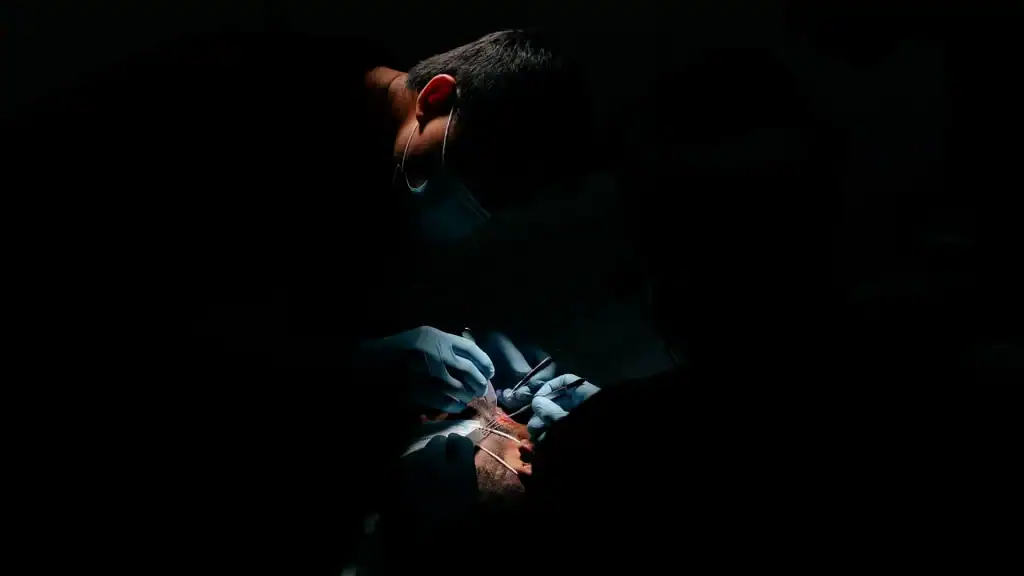





Technical Expertise for Natural-Looking Results
The technical aspects of facial hair transplantation require not only surgical skill but also an understanding of how different individual follicular units and placement angles affect the final aesthetic outcome.
Dr. Sharma’s extensive experience with thousands of hair restoration procedures has refined his ability to select individual hair follicles that best suit each specific area of the face, ensuring a thicker beard without the artificial appearance that can result from improper technique.
His techniques focus on blending transplanted follicles with surrounding hair to create a seamless and natural appearance.
Dr. Sharma’s Qualifications
- Licensed medical practice with over 15 years of clinical surgical experience
- More than 1000 procedures performed personally, with no technician involvement
- Active membership in the ISHRS, adhering to physician-only surgery standards
- Advanced training in 3D TRANSPLANNER® technology and trichoscopy for preoperative mapping
- Specialized expertise in facial anatomy and follicular unit selection for optimal aesthetic outcomes
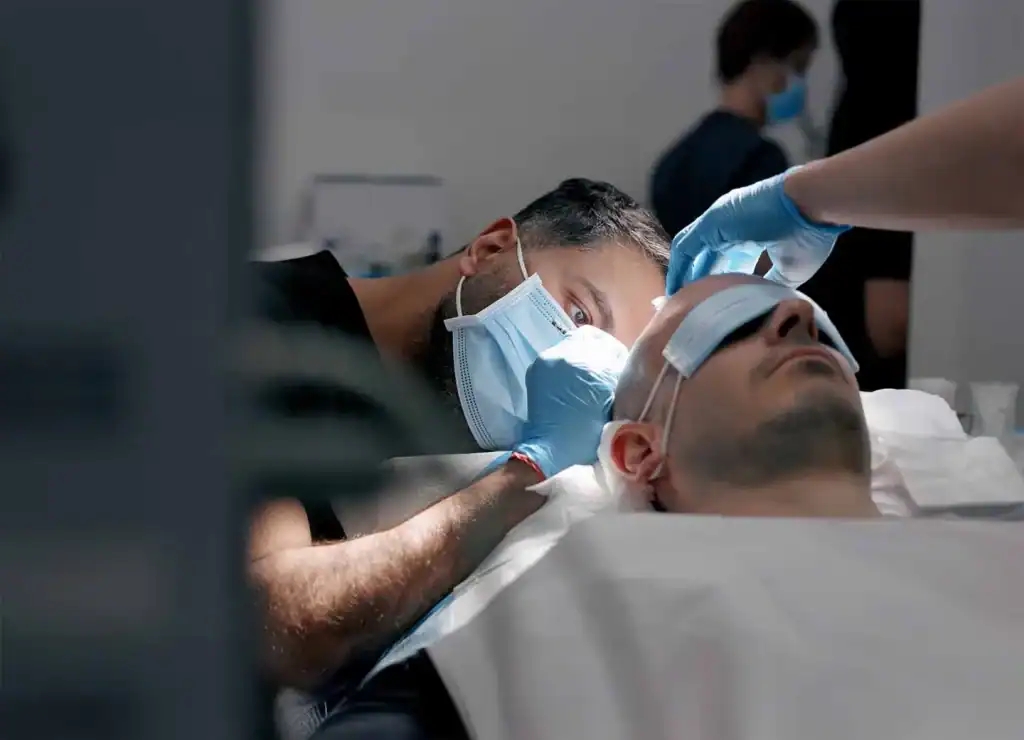
Dr. Sharma’s Facial Hair Transplant Approach
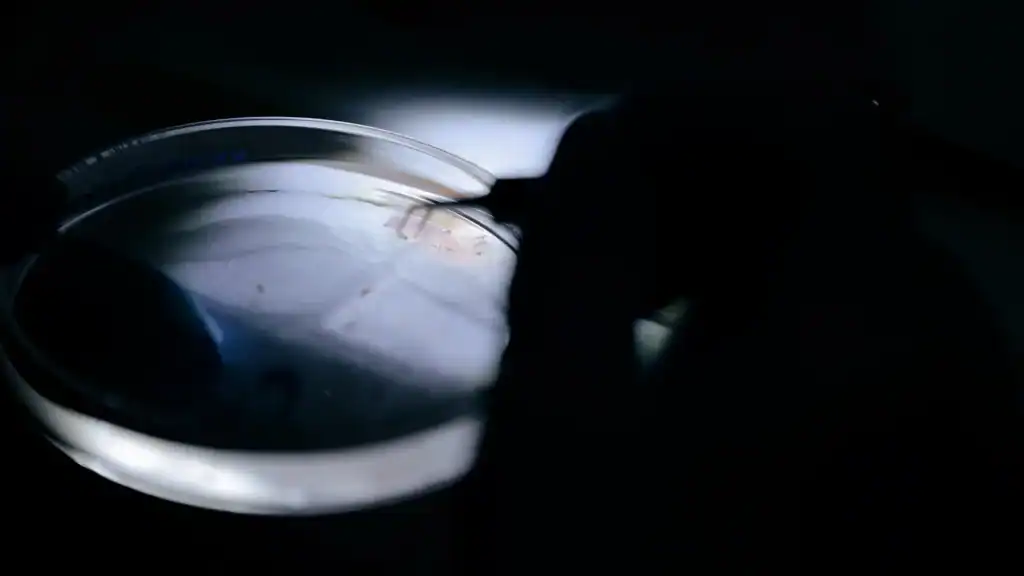
Precision-Guided Follicular Transplantation
Beard and moustache hair transplant procedures involve the careful transfer of follicular units from the scalp to areas of sparse or absent facial hair.
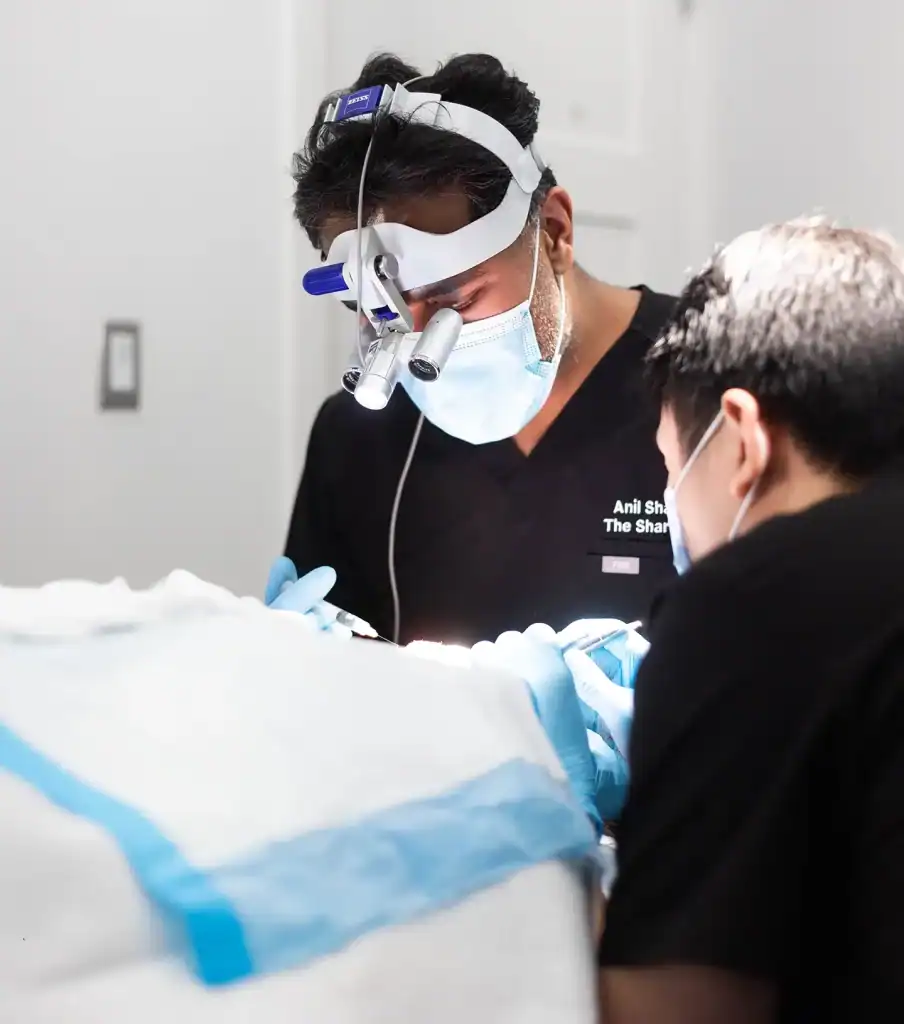
Using magnification and micro-surgical tools, Dr. Sharma carefully extracts hair follicles from the donor area to ensure the bulb and shaft remain intact. These grafts are then individually hand-placed through custom slits into the beard area.
This minimally invasive procedure allows for precise placement of individual follicular units while preserving surrounding scalp tissue and maintaining healthy hair in the donor region.
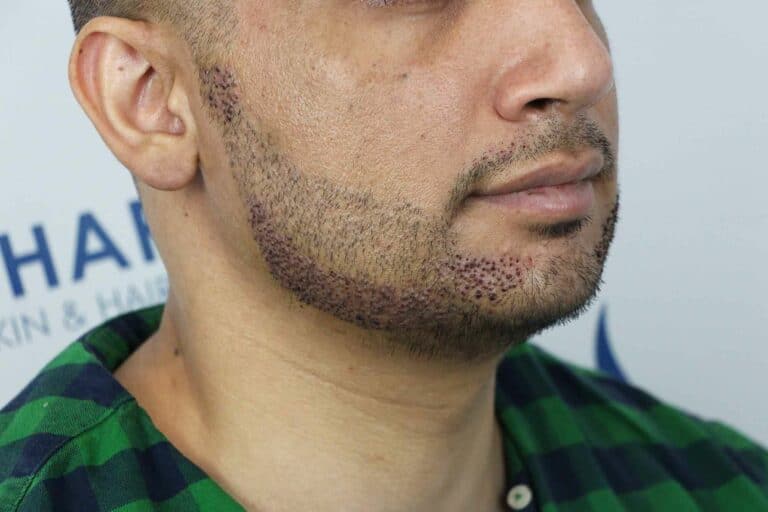
Personalized Surgical Planning Based on Facial Anatomy
The foundation of successful facial hair transplantation lies in understanding that each patient’s facial anatomy is unique. Dr. Sharma carefully evaluates factors such as jaw width, the angle of the ramus, and overall facial proportions before designing a personalized treatment plan for you.
These anatomical considerations directly influence follicle placement patterns, angulation decisions, and the selection of appropriate follicular unit sizes to achieve the most natural appearance possible.
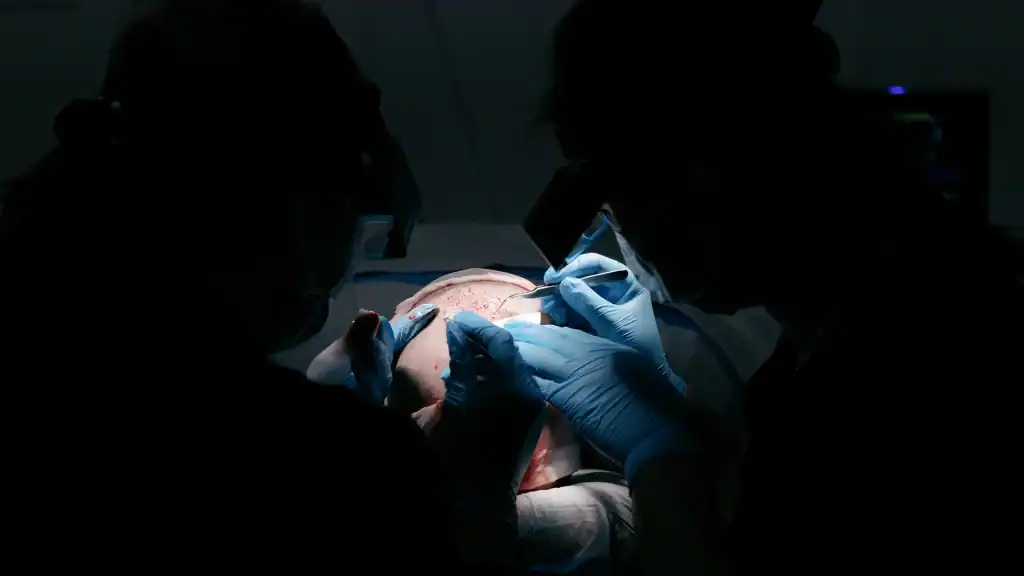
Core Elements of Dr. Sharma’s Technique
Essential elements of Dr. Sharma’s approach involve physician-performed extraction and placement using manual techniques with a punch diameter of 0.6 to 0.7 mm. Trichoscopy assessment to evaluate the quality of healthy hair follicles in the donor area. This procedure is performed under local anesthesia with meticulous attention to patient comfort and typically results in minimal scarring. This approach is indicated for congenital gaps, trauma-related hair loss, or patterned facial hair deficiency.
Understanding Facial Hair Transplant Results: A Detailed Timeline
The Natural Evolution of Your New Facial Hair
One of the most crucial aspects of facial hair transplantation is understanding that results develop gradually over an extended period. This timeline reflects the natural hair growth cycle and the biological process of follicular adaptation to its new environment. Dr. Sharma ensures that each patient has realistic expectations about this journey and understands the various phases of hair growth and development.
Shedding Phase
Regrowth Begins
Visible Density Development
Specialized Beard Transplants vs. Non-Specific Facial Hair Procedures
| Dr. Sharma's Specialized Approach | Non-Specific Facial Hair Procedures |
|---|---|
| Specifically targets beard, jawline, sideburns, and moustache zones using anatomical landmarks. | May include various facial areas without strict anatomical zone planning or consideration of natural growth patterns. |
| Planned using anatomical landmarks, including mandibular line, chin-lip ratio, and ramus angle for symmetry. | Often guided by stylistic preference without considering facial nerve pathways or natural hair flow patterns. |
| Grafts selected and placed based on natural beard growth angles, typically 10-20° emergence from skin. | Grafts may be placed at higher or inconsistent angles, risking unnatural appearance or deviation from natural growth. |
| Follicular units are carefully sized and dissected to avoid a pluggy appearance, with larger units divided into components. | May use inappropriately sized follicular units without proper dissection, leading to unnatural pluggy appearance. |
| Test sites were performed to ensure proper graft-to-site matching, avoiding a cobblestone appearance. | May force grafts into improperly sized sites, creating a cobblestone texture or unnatural hair emergence patterns. |
Candidacy Assessment for Facial Hair Transplantation
Determining Your Suitability for Dr. Sharma's Specialized Approach
The decision to proceed with facial hair transplantation requires careful evaluation of multiple factors that influence both the feasibility of the procedure and the likelihood of achieving optimal results. Dr. Sharma’s comprehensive assessment process ensures that each patient is well-suited for the procedure and has realistic expectations about the outcomes.
Dr. Sharma’s evaluation process involves a thorough assessment of facial anatomy, including the structure of the jaw and the angle of the ramus. This assessment is crucial for determining the most suitable approach for each patient. The findings from this anatomical evaluation directly impact decisions regarding the selection of follicular units, the angles at which they are placed, and the density patterns that will result in the most natural-looking outcomes.
Ideal Candidates for Dr. Sharma's Technique:
- Patients with a stable donor zone that provides adequate follicular units for transplantation without compromising scalp appearance.
- Individuals free from inflammatory scalp conditions that could affect procedure success or healing.
- Those who possess a clear understanding of the long-term realities and healing timeline associated with follicular transplantation.
- Patients who are medically cleared for outpatient surgery and are able to tolerate local anesthesia.
- Men with realistic expectations about the gradual nature of hair growth and final density achievement.
Factors That May Affect Candidacy:
- Patients with poor donor density may not be suitable candidates for beard transplantation, as the available follicles may be better preserved for future scalp restoration needs.
- Candidates who aren't committed to following detailed aftercare instructions may experience suboptimal results or complications.
- Patients who present with scarring alopecia or conditions such as alopecia areata are encouraged to seek clearance from their medical dermatologist first to ensure stability of their underlying condition. Even with a hair transplant, there is always a risk associated with these conditions.
- Because these are medical procedures, Dr. Sharma also assesses whether any underlying medical conditions may affect healing, graft survival, or long-term results. Not all patients are suitable candidates for surgery.
Dr. Sharma's Precise Surgical Technique:
Step-by-Step Process
01Anatomical Planning and Precision Marking
02Donor Area Assessment and Follicular Extraction
03Test Site Evaluation and Recipient Site Preparation
04Precise Follicular Placement and Angulation Control
Facial Zone Specialization: Moustache, Sideburn, and Cheek Enhancement
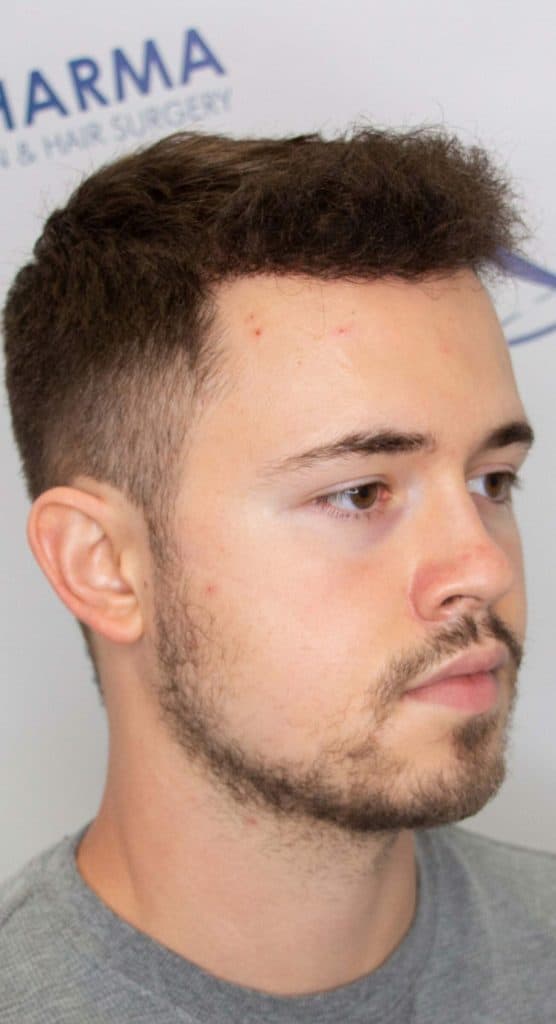
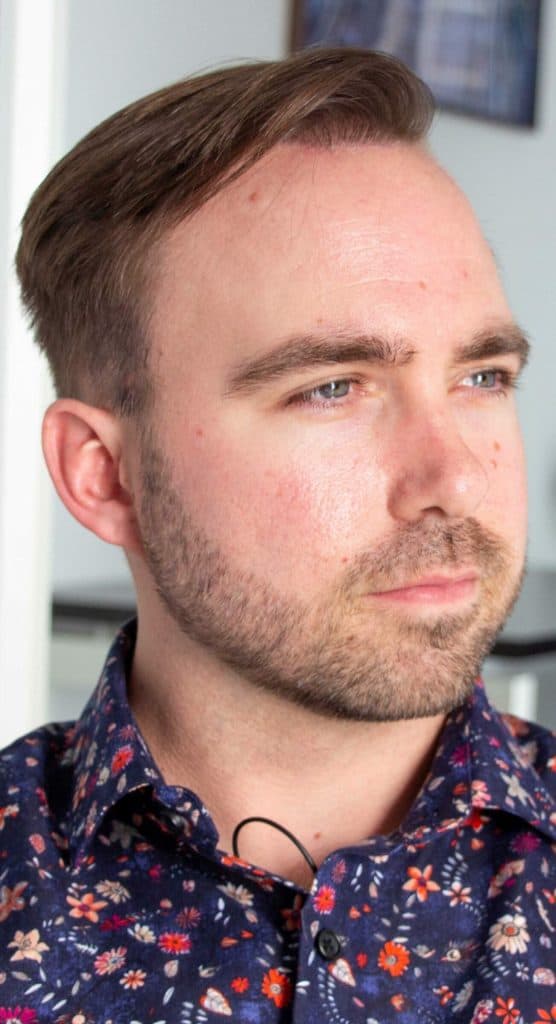
Customizable Sideburns
Sideburn restoration requires careful attention to the natural tapering pattern that occurs as hair transitions from the temporal region toward the jaw line. Dr. Sharma uses narrow, angled follicular units that create natural framing effects while maintaining appropriate density gradients. The angulation of sideburn hair typically follows the contour of the face, requiring precise placement to avoid unnatural growth patterns.
Goatee and Chin Area Reconstruction
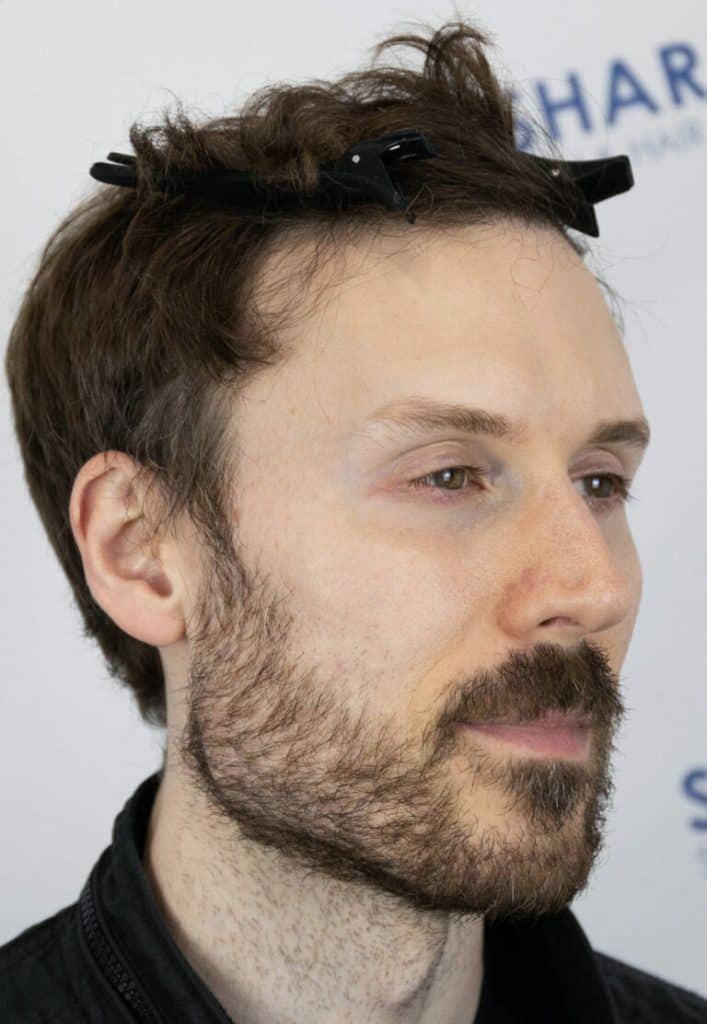
The goatee region presents unique challenges due to the convergence of multiple growth directions within a relatively small area. Dr. Sharma’s approach involves creating multi-directional growth zones with denser central distribution that gradually transitions to sparser peripheral areas. The careful selection of appropriately sized follicular units prevents the pluggy appearance that can occur when oversized grafts are used in this visible central facial area.
Cheek Density and Blending
Cheek area enhancement often requires the use of single-hair grafts and carefully dissected follicular units to create fine blending with existing hair. Dr. Sharma’s attention to follicular unit size becomes particularly important in this area, where larger grafts can create an obviously transplanted appearance. The natural growth pattern of cheek hair, which tends to follow facial contours, guides placement decisions and angulation choices.
Dr. Sharma's Advanced Approach at Canadian Hair Transplant
What Sets Our Technique Apart from Standard Procedures
Dr. Sharma’s approach to facial hair transplantation demonstrates his technical excellence and commitment to achieving completely natural-looking results. He avoids the common pitfalls that can compromise aesthetic outcomes by incorporating specific technical innovations and strict quality control measures, which set his practice apart from standard hair transplantation methods.
Dr. Sharma carefully conducts all extractions personally using forceps and fine punches under high magnification. Robotic tools are not utilized, ensuring the highest level of precision and care in follicular unit harvesting. This hands-on approach enables the real-time assessment of follicular quality, allowing for the selection of optimal grafts for specific facial areas.
Both extraction and placement procedures are conducted using binocular magnification to ensure surgical accuracy and precision. This enhanced visualization enables Dr. Sharma to make precise angulation decisions and avoid the placement errors that can lead to unnatural hair growth patterns or cobblestone appearance.
Every graft undergoes examination under a stereographic microscope to verify structure and stem cell viability before placement. Larger follicular units are carefully dissected into individual components to prevent the pluggy appearance that can result from using oversized grafts. This attention to follicular unit sizing ensures that each graft is optimally matched to its intended recipient site.
Grafts are preserved in chilled HypoThermosol plus ATP solution at temperatures between 2 and 4°C to maintain viability during out-of-body time. This advanced preservation technique helps ensure optimal graft survival and contributes to the natural hair growth patterns that characterize successful facial hair transplantation.
Hairlines and facial hair patterns are designed based on fixed facial landmarks and long-term aesthetic planning, ensuring natural and pleasing results that complement individual facial anatomy. Dr. Sharma ensures the final result complements natural facial proportions by considering jaw width and ramus angulation.
Density is achieved without over-harvesting, ensuring the donor area remains intact for any future procedures if necessary. This conservative approach reflects Dr. Sharma's understanding that facial hair transplantation should enhance appearance without compromising future treatment options. Different hair transplant procedures have their own advantages depending on the treatment area, donor supply, and the patient’s long-term goals.

“On the actual day of the surgery, I could not have asked for a better experience. All the staff are so knowledgeable, and work in unison like a well-oiled machine. They truly care about your experience and want to ensure that you are comfortable.”

Patient testimonials reflect individual experiences and are not intended to guarantee specific results. Facial hair transplant outcomes vary based on donor supply, facial anatomy, healing response, and adherence to post-operative care. All procedures are performed by Dr. Anil Sharma, MD, a licensed physician, in compliance with ISHRS surgical standards. These testimonials are provided for informational purposes only and should not be used as a substitute for clinical evaluation.
Considering Facial Hair Transplant in Edmonton? Your Next Steps
Schedule a Clinical Consultation with Dr. Sharma
Are you considering a beard transplant in Edmonton? The process begins with a personalized medical consultation. Your journey towards achieving restoring facial hair starts with a thorough clinical evaluation conducted by Dr. Sharma. During this consultation, he will assess your unique anatomy, discuss your goals, and determine if facial hair transplantation is suitable for you. This detailed evaluation ensures you have realistic expectations and a clear understanding of the procedure’s technical aspects.
The consultation also provides an opportunity to:
- Discuss the timeline for results
- Understand the gradual nature of hair growth
- Learn about the specific aftercare requirements that contribute to optimal outcomes
Dr. Sharma’s commitment to patient education ensures that you have all the information needed to make an informed decision about proceeding with facial hair transplantation.
Contact Canadian Hair Transplant today to schedule your consultation with Dr. Sharma’s team and learn how his specialized approach can help you achieve the natural-looking facial hair you’ve always wanted. As a physician-led hair restoration clinic, Canadian Hair Transplant focuses on evidence-based care rather than one-size-fits-all hair restoration services.
Frequently Asked Questions
What makes a beard transplant different from a scalp transplant?
Beard and moustache transplants require smaller, more precisely angled grafts and are performed in visible facial zones. Dr. Sharma uses only single and double follicular units to replicate natural facial hair patterns. Unlike scalp transplantation, facial procedures must account for curvature, growth direction, and framing of facial features. In some cases, follicular unit transplantation may be recommended for scalp restoration, while beard work is often performed using FUE-based methods.
Am I a candidate for a beard or moustache transplant?
Candidates typically have patchy growth, scarring, or congenital absence in specific facial regions. Dr. Sharma performs a comprehensive facial anatomy assessment to ensure appropriate graft selection and placement angles. Patients must have realistic expectations and a stable donor supply.
How long does it take to see results?
Initial shedding occurs in the first few weeks. Regrowth typically begins at 3 months, with visible density by 6 months. Full results mature between 9 to 12 months, and the transplanted facial hair can be shaved and styled like native hair.
Can someone else donate hair for my beard transplant?
No. Hair transplantation requires the use of your own follicles. Using someone else’s donor hair would result in immune rejection. Only follicles harvested from your own DHT-resistant scalp zones are used.
Can I choose the shape of my beard?
Beard design is based on facial proportions. Dr. Sharma considers anatomical landmarks like jaw width, ramus angle, and hairline transition to create a natural and personalized outcome.
Are beard transplants the same as hair implants or hair systems?
No. Beard transplantation is a physician-performed hair transplant surgery that uses your own follicles, not artificial hair implants or hair systems. These are very different approaches, and Dr. Sharma will explain which options are medically appropriate during your consultation.
Are there non surgical treatments for beard loss?
In some cases, non surgical treatments may be discussed depending on the cause of hair loss. However, beard transplantation is often recommended when patients want a long-term solution for areas where hair does not grow adequately on its own.