
If you’re considering a hair transplant in Calgary, it’s important to choose a physician-led approach focused on long-term, natural results. Dr. Sharma works with patients from Calgary and across Alberta, guiding them through a personalized hair restoration journey based on each individual’s hair loss pattern and goals.


Dr. Sharma brings extensive clinical experience to surgical hair loss treatment, with training across the United Kingdom, Italy, France, the United States, and Canada. His approach combines advanced techniques with a deep understanding of hair growth patterns, donor anatomy, and the progression of conditions like male-pattern baldness and female-pattern baldness.
His extensive expertise in facial aesthetics, spanning across Europe and North America, has made him well-versed in understanding facial harmony and how to frame the face, whether it be for beard transplants, moustache restoration, or eyebrow transplants. His comprehensive knowledge ensures that each procedure not only restores hair density but also enhances the patient’s natural features.

These photographs document real results of surgical hair transplants performed by Dr. Sharma for patients treated for receding hairlines, hair thinning, and pattern baldness.
Patient outcomes vary depending on individual factors, including scalp condition, donor hair density, healing response, and adherence to post-operative care instructions. Each case is approached with long-term planning in mind, taking into account the risk of further hair loss and how to maintain consistent, natural-looking density over time.
All before-and-after photographs and testimonials featured are of real patients who received treatment from Dr. Sharma for various forms of hair loss. Individual outcomes vary based on hair characteristics, scalp condition, and healing factors.
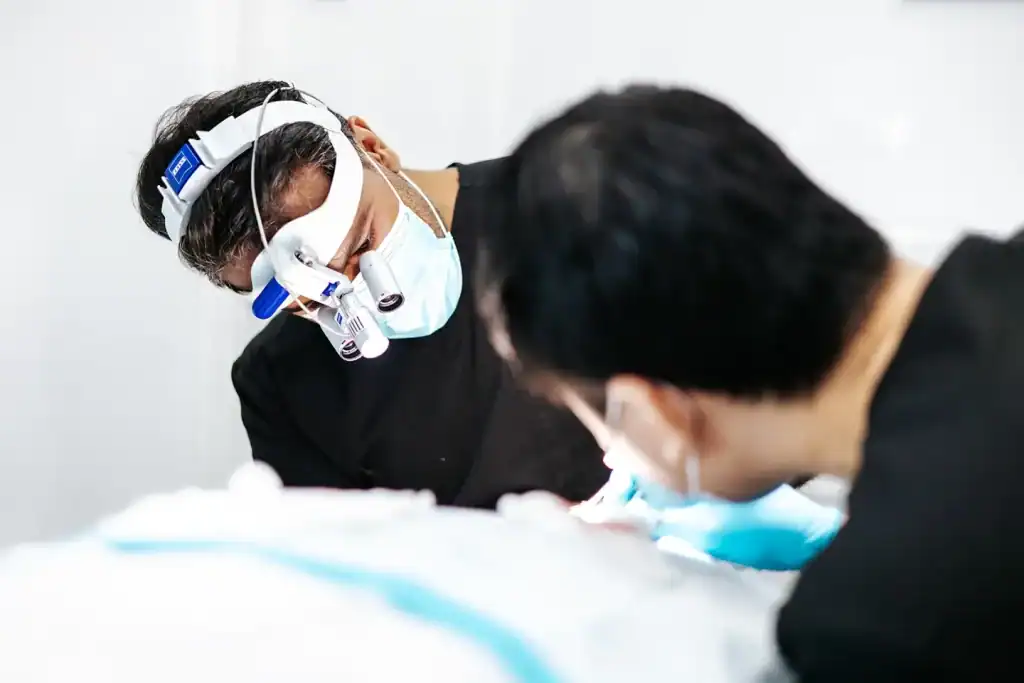
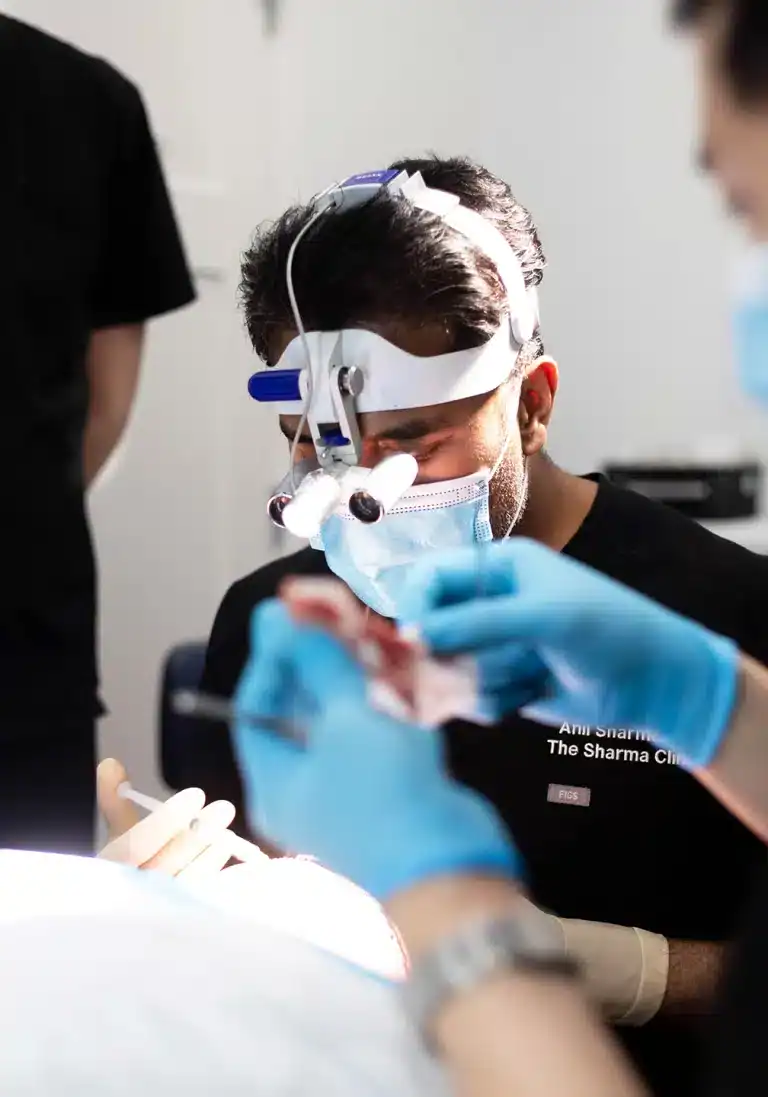
A hair transplant is a surgical procedure in which hair follicles are taken from a donor area and relocated to areas affected by progressive thinning, receding hairlines, or bald spots. All grafts are extracted and placed by hand under magnification to ensure precision and long-term viability.
Dr. Sharma performs both extraction and strip-based techniques, selecting the most appropriate option based on scalp condition, donor availability, and long-term goals. Every treatment plan is customized using personalized treatment plans designed to achieve balanced, natural density.
The procedure relies on the principle of donor dominance, meaning that hair follicles taken from the back and sides of the scalp retain their genetic resistance to DHT even after being transplanted to areas affected by androgenetic alopecia, male-pattern baldness, or female-pattern baldness. This results in a permanent restoration of hair in areas of loss and an improvement in overall hair density.
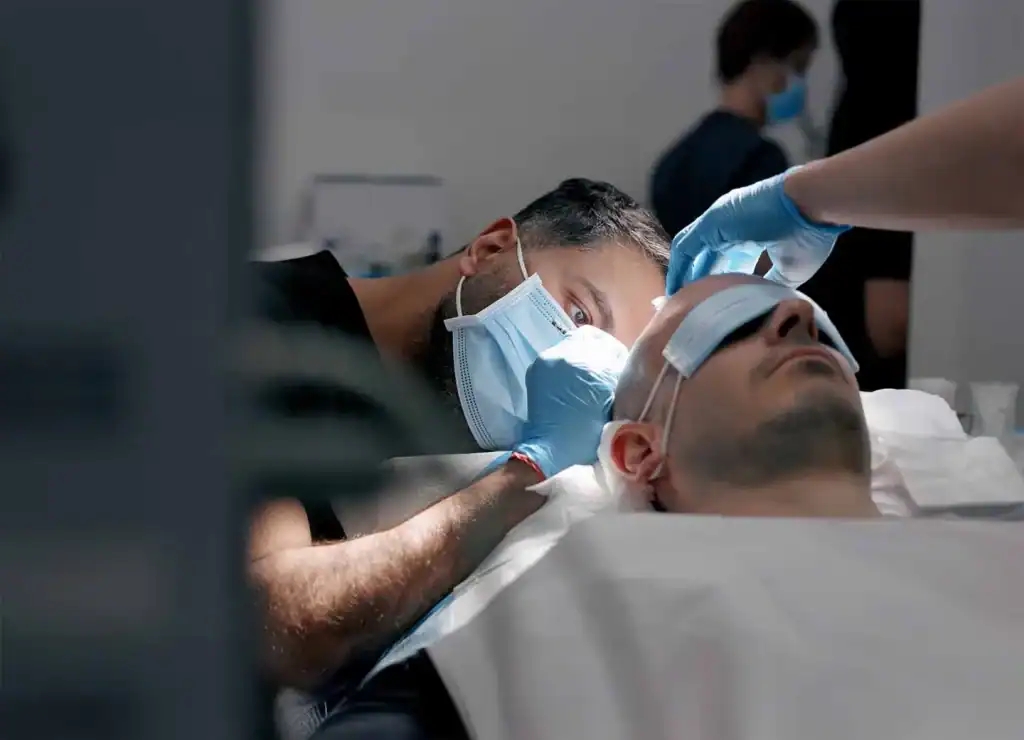
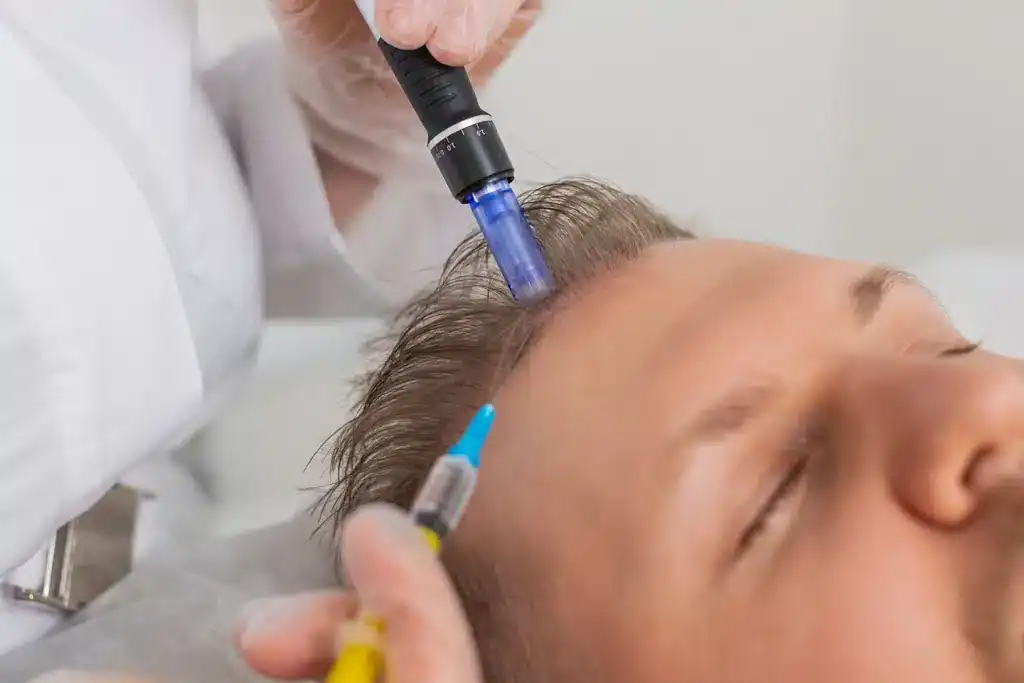
All hair transplant procedures are physician-led and based on comprehensive medical evaluation. Dr. Sharma determines whether FUE hair transplants or FUT hair transplants are most appropriate based on donor supply, hair loss progression, and long-term goals for density and coverage.
Follicular unit extraction (FUE) is a precise technique where individual follicular units are carefully removed using a small punch tool and transplanted into thinning areas.
This method allows for targeted placement while preserving surrounding tissue, making it a suitable option for patients who prefer shorter hairstyles or want to avoid linear scarring.
The follicular unit extraction technique enables the selective harvesting of high-quality follicular units while preserving the surrounding donor hair. Each graft is individually assessed for viability before placement, ensuring optimal hair density. Patients can typically return to their normal activities within a few days, although exercise restrictions are in place during the initial healing period.
Follicular unit transplantation (FUT) involves removing a strip of donor tissue and dissecting it under magnification to isolate grafts.
This method can provide a higher number of grafts in a single session and is often recommended for patients with more advanced hair loss requiring greater coverage.
Closure is performed using the trichophytic technique to minimize scarring. The follicular unit transplantation method allows for harvesting of large numbers of grafts while preserving the overall donor area for potential future procedures addressing progressive hair loss.
Beard transplants restore hair density to patchy or scarred areas of the beard, jawline, or moustache using follicular units harvested from the scalp donor area. Dr. Sharma uses primarily single and double follicular units to match the natural direction and angle of beard growth. Each graft is placed individually under magnification with careful attention to emergence angle and growth direction.
Natural angulation is critically important in beard transplantation, as understanding how the grafts will exit and how they will sit determines the final aesthetic outcome.
Eyebrow transplants involve surgically implanting single-hair grafts into the brow region. This technique addresses issues such as thinning, overplucking, or scarring while creating optimal facial framing.
Not every patient experiencing hair loss is an ideal candidate for surgical hair restoration. A transplant evaluation includes a comprehensive review of your hair loss history, pattern baldness progression, donor supply assessment using trichoscopy, and detailed discussion of long-term hair density goals. Patients with active shedding, inflammatory scalp conditions, or limited donor density may not be eligible for surgery at the time of initial consultation.
Dr. Sharma evaluates each patient individually, considering not only the current state of hair loss but also the predicted progression of pattern baldness and available treatment options. Some patients may benefit from medical therapy to stabilize hair loss before surgical intervention.
If you are interested in this, please consult your family doctor to obtain a specialist referral first. For patients with underlying medical conditions or those under dermatological care, it is strongly recommended that they complete all medical treatment protocols prior to consulting with Dr. Sharma. Currently, we are unable to provide medical dermatology opinions at our hair transplant clinic.

“On the actual day of the surgery, I could not have asked for a better experience. All the staff are so knowledgeable, and work in unison like a well-oiled machine. They truly care about your experience and want to ensure that you are comfortable.”

Every surgical plan starts with a thorough medical consultation.
During your consultation, factors like donor density, scalp health, and hair loss patterns are carefully assessed through trichoscopy and clinical examination. If you’re a suitable candidate for Follicular Unit Extraction or Follicular Unit Transplantation, Dr. Sharma will walk you through each stage of the procedure, including healing timelines and what to expect as results develop.
To find out about hair transplant cost in Calgary, a personalized consultation is required, as pricing varies based on the number of grafts and individual hair loss pattern.
Important Note: Hair restoration is an aesthetic procedure rather than a medical necessity.
Important Note: Hair restoration is an aesthetic procedure rather than a medical necessity.
What the Consultation Involves:
What Dr. Sharma Assesses:
Why the Consultation Matters:
What Patients Can Expect to Learn:
Options That May Be Discussed:
Important Note: Hair restoration is an aesthetic procedure rather than a medical necessity.
While our clinic is currently based in Edmonton, we regularly work with patients from Calgary and the surrounding area seeking physician-led hair transplant care. Dr. Sharma offers both Follicular Unit Extraction (FUE) and Follicular Unit Transplantation (FUT), with each procedure carefully selected based on your hair loss pattern, donor availability, and long-term goals.
All surgical procedures are performed under local anesthesia with detailed planning to ensure natural results and long-term hair density.
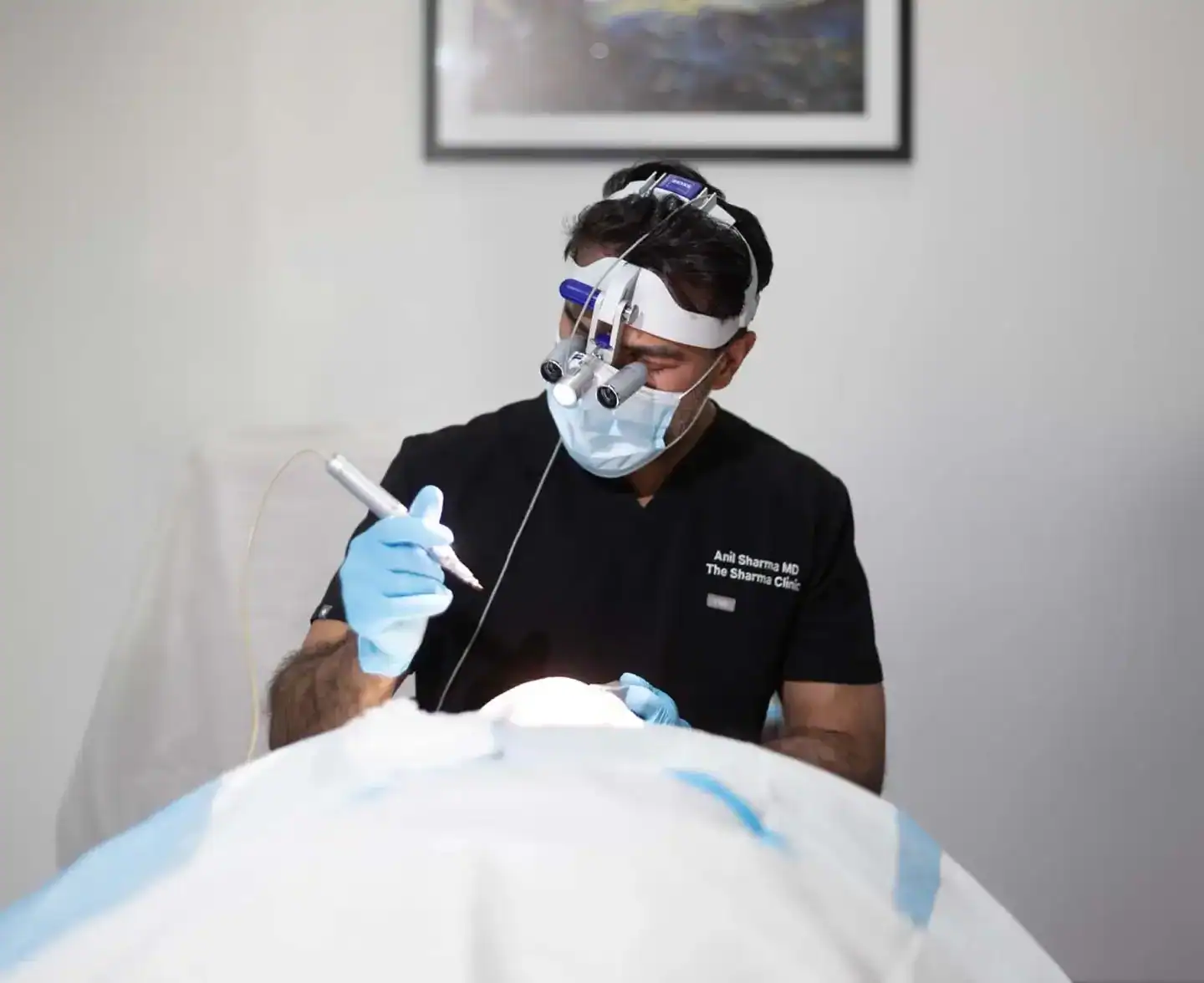
Dr. Sharma personally conducts all extractions, recipient site creation, and graft placement. No aspects are delegated to technicians. This ensures compliance with ISHRS standards and preserves surgical accountability.
The consultation includes trichoscopy, scalp analysis, donor evaluation, and a discussion of long-term density planning. Patients will receive a tailored plan and an honest assessment of what surgical outcomes are achievable based on their current status.
Yes, Dr. Sharma regularly treats female-pattern hair loss using both FUE and FUT. Each case is reviewed individually to determine the best approach based on donor supply, thinning pattern, and hormonal or medical history.
If you’re not eligible for surgery, Dr. Sharma will explain why and may advise on non-surgical options or medical therapies. No unnecessary procedures will be recommended.